Kidney disease
Unfortunately, kidney disease is very common in chameleons. The reasons for this have not yet been fully established.
Causes
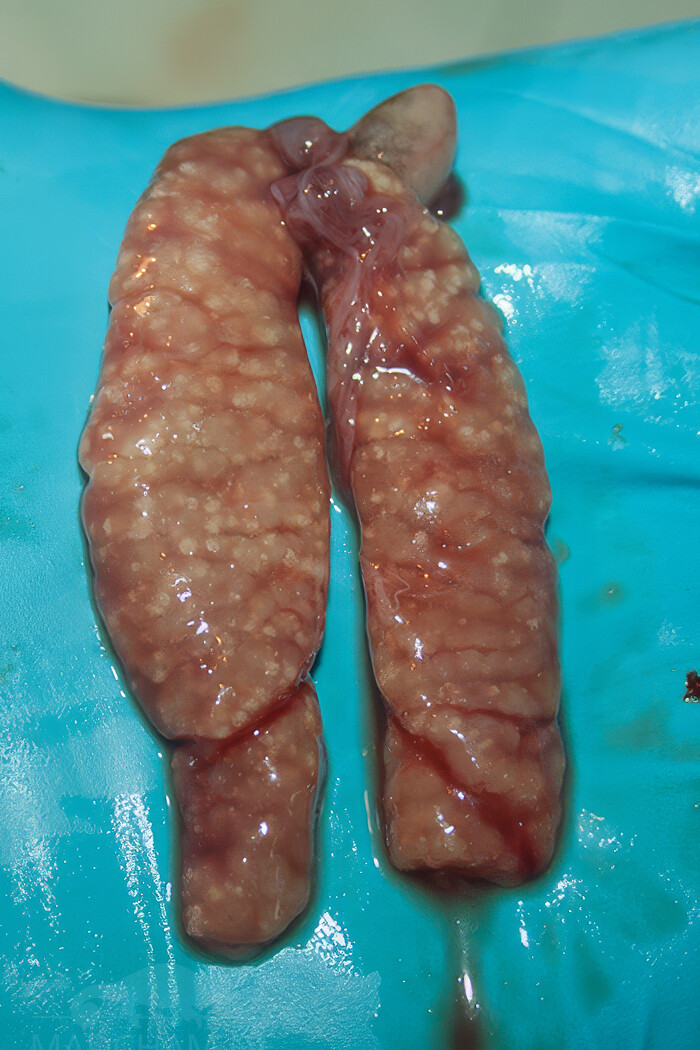
A chameleon almost entirely riddled with gouty tophi – the animal died as a result
There are many different causes and triggers of kidney disease in chameleons. Gout is one of the most common. It is characterised by a persistently elevated level of uric acid in the blood, which is usually caused by dehydration and overfeeding or an unbalanced diet containing an excess of protein. The condition is discussed in detail in a separate article here.
A number of pre-existing conditions, such as rickets or other forms of osteomalacia (often grouped under the better-known term ‘metabolic bone diseases’), can cause long-term damage to internal organs, including the kidneys. A chameleon that suffered from rickets as a juvenile may be more prone to kidney disease later in life. A chronic vitamin A deficiency can also damage certain cells in the kidneys. However, this deficiency is significantly less common in chameleons than is often assumed by keepers.
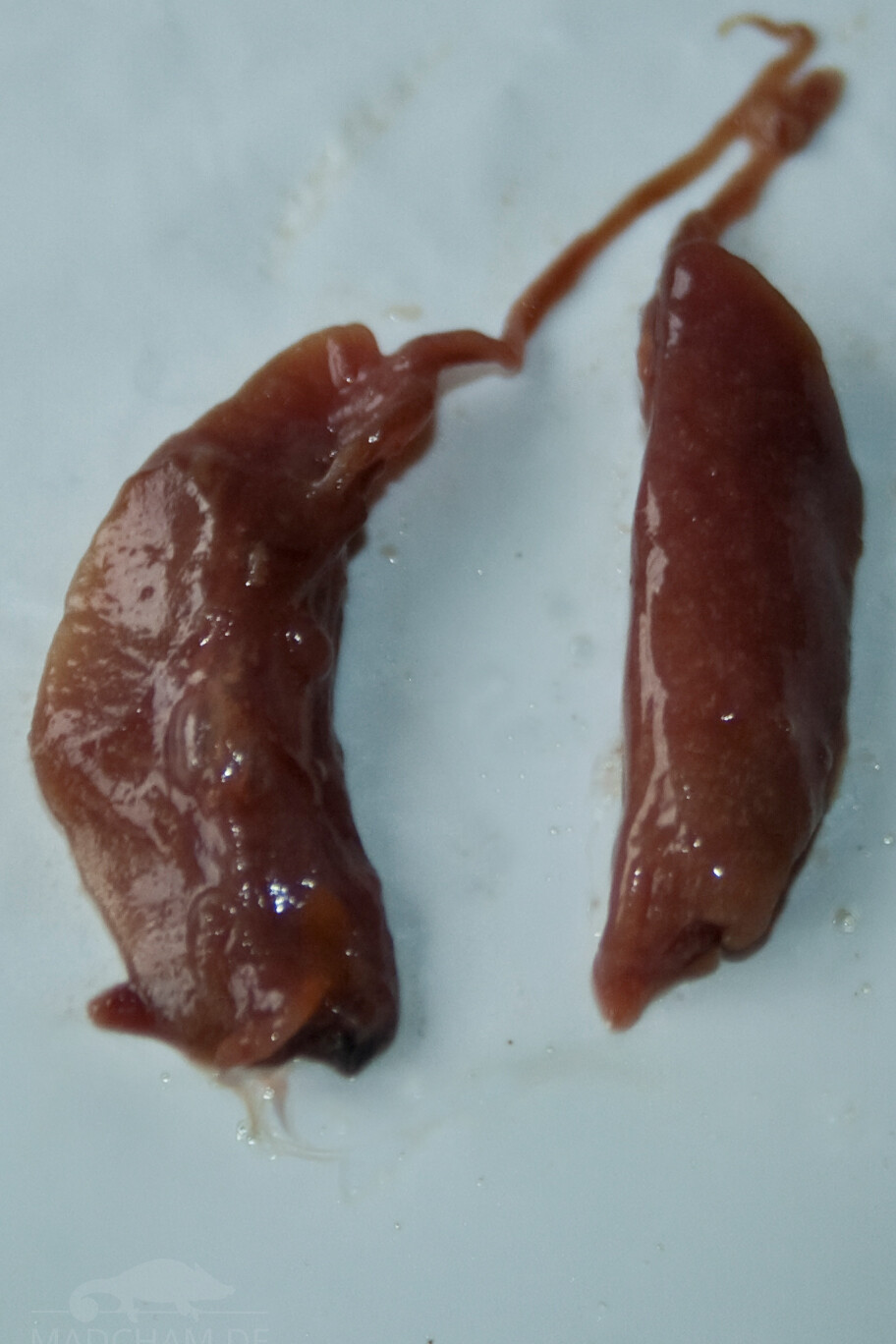
The normal colour and structure of the kidneys of a Furcifer pardalis
Untreated bacterial infections are also common causes of kidney disease in chameleons. Abscesses, mouth rot, pododermatitis or other bacterial infections that are initially localised are often only noticed at a late stage in chameleons. However, the longer such an infection persists, the greater the likelihood that bacteria will be carried via the bloodstream to internal organs. In the worst-case scenario, a condition known as bacteraemia – the presence of bacteria in the blood – can progress to sepsis, or blood poisoning. This can lead to severe organ damage, including damage to the kidneys.
Some fungal infections (mycoses) can lead to granulomas in the kidneys.
Various parasites can migrate to the kidneys, where they can cause severe inflammation and damage. Among the most common parasites in chameleons are coccidia, which in some cases lead to renal coccidiosis. Less commonly, single-celled organisms such as certain flagellates or amoebae infect the kidneys.
Chronic poisoning caused by the repeated consumption of certain plants can contribute to kidney disease. Many plants found in chameleon terrariums contain oxalic acid, including the very commonly used Ficus benjamini and Callisia repens, which is sometimes even sold as a food plant. Oxalic acid ingested by the chameleon is converted into calcium oxalate within its body. These oxalates can build up in the kidneys and cause tissue damage there. As a preventative measure, it is therefore advisable to remove such plants from the terrarium if your chameleon enjoys eating them. Our list of plants sets out which plants may contain potentially toxic substances.
Other causes of kidney disease are considerably less common in chameleons, such as kidney cysts, pathological deposits of calcium salts in the kidney tissue (known as nephrocalcinosis) or kidney tumours.
Symptoms – What are the signs of kidney disease?
The first signs of kidney disease in chameleons develop gradually and are subtle at first. The animals become quieter, move less and appear generally weaker. Later, their eyes become sunken, and the chameleon begins to lose weight and muscle mass. These symptoms are still very non-specific and can also occur in many other conditions.
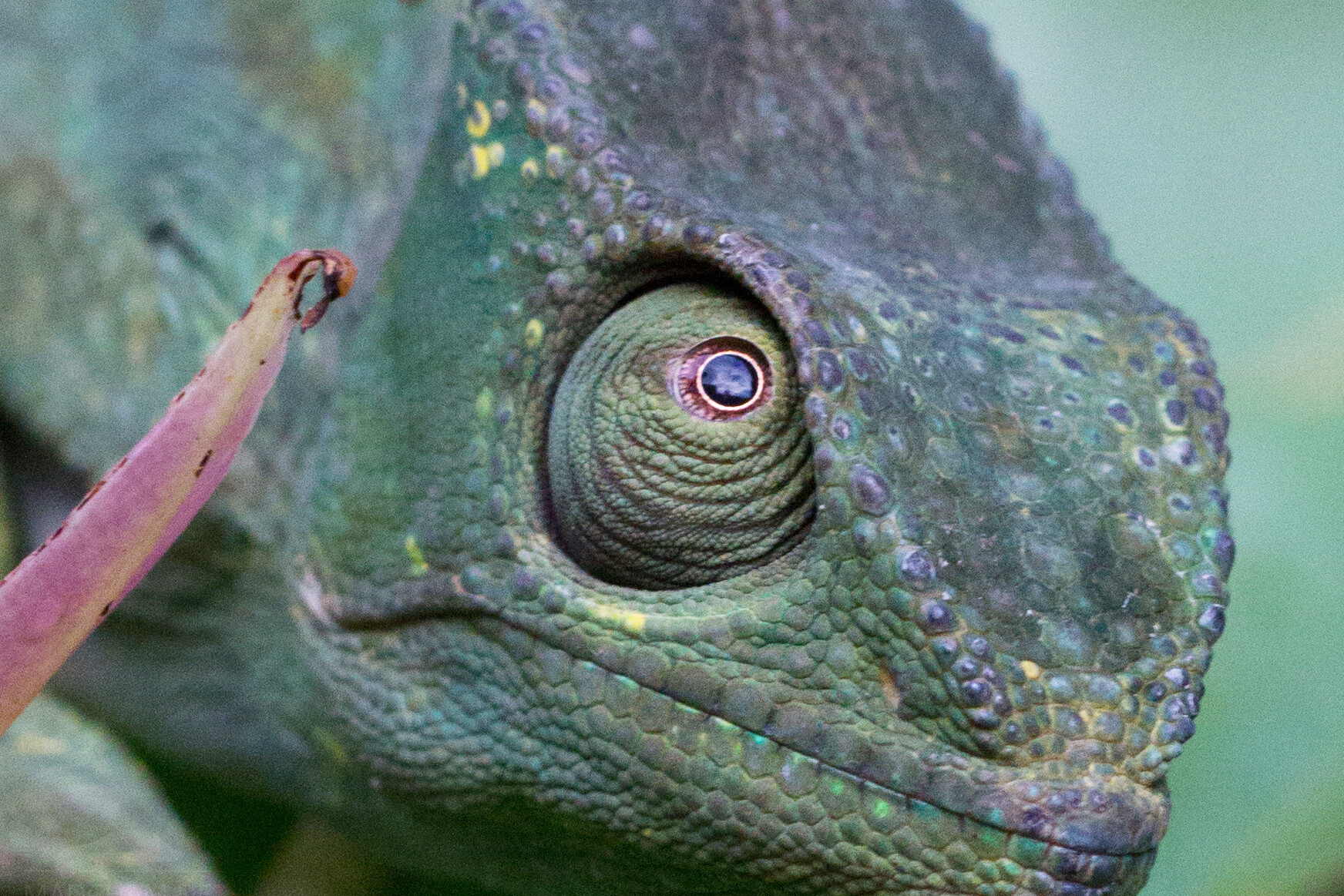
A female Calumma globifer with noticeably sunken eyes
Many chameleons develop pronounced gular edema when suffering from kidney disease; edema of the eyelids can occur, too. These symptoms are often not permanent, but come and go with considerable variation. Eventually, the animals become increasingly lethargic, to the point where they barely move from their perch. If a chameleon is hand-fed water, the owner may sometimes notice that the chameleon drinks increasing amounts of water and appears to be constantly thirsty despite a regular supply of water. Many chameleons with advanced kidney disease eventually stop eating.
Gout is characterised by swollen, ‘lumpy’ joints. The joints are painful and therefore severely restrict movement. In very advanced cases of gout, chameleons climb very little and instead prefer to remain perched on the same branch for hours on end. In the final stage, many chameleons let their arms and legs hang down from the branch to relieve the pain in their limbs. Over time, the deteriorating kidney function leads to a steadily worsening general condition and apathia.
Diagnosis and treatment
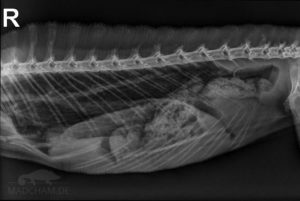
If kidney disease is suspected, you should consult a vet specialising in reptiles as soon as possible. Among other things, the vet will take a blood sample from the chameleon, which they can use to assess whether kidney disease is present. Imaging techniques (X-rays, ultrasound) as well as faecal and urate tests can help to identify the cause of the kidney disease and determine the current stage of the condition.
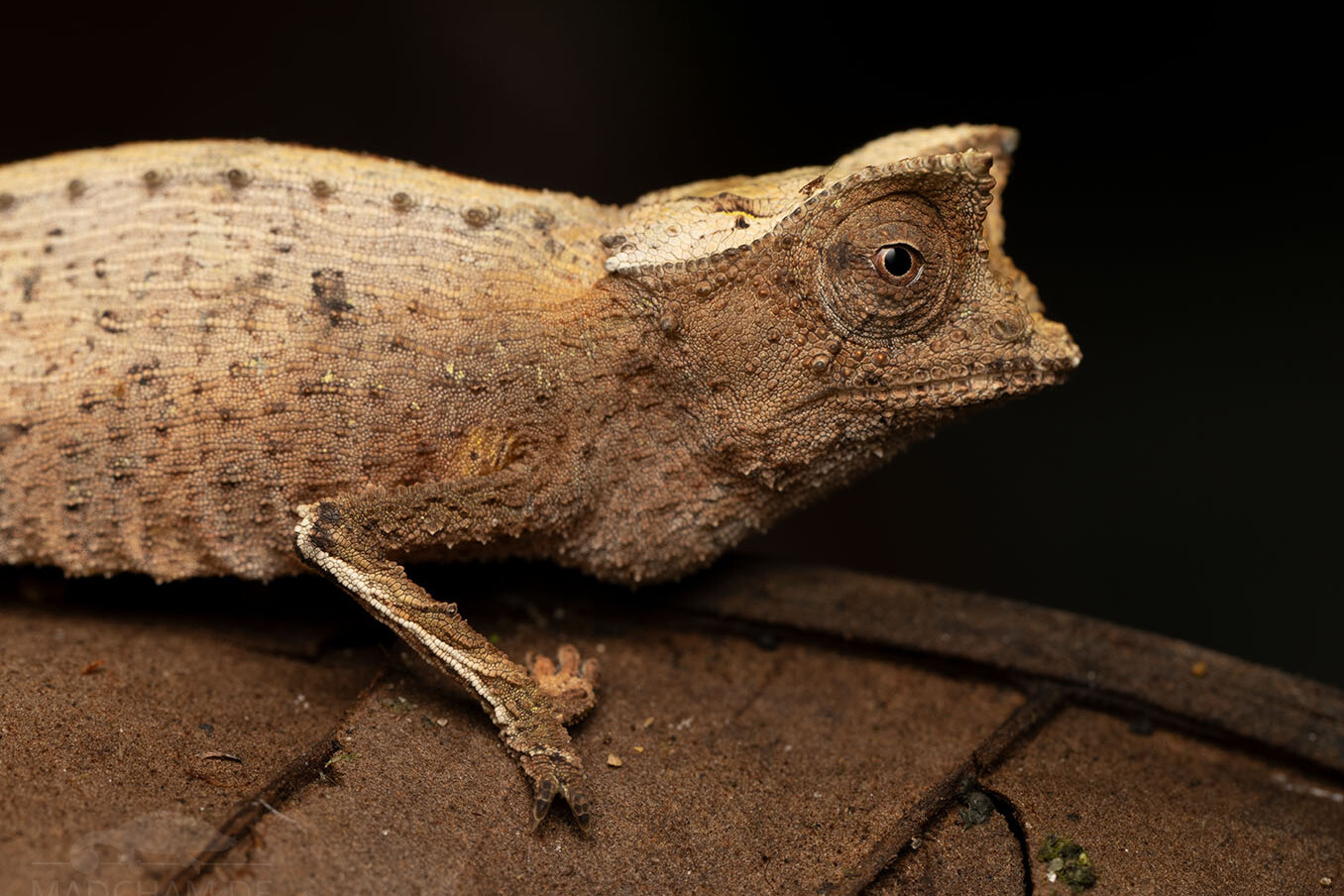
Edema on anterior chest extending into the gular sac in a Brookesia griveaudi
The treatment of kidney diseases depends primarily on the cause. Parasitical or bacterial kidney diseases can be treated with medication. This allows the cause to be addressed, which is more difficult in the case of other conditions such as gout and, unfortunately, not possible at all for some conditions such as kidney cysts. However, damage that has already occurred to the kidney tissue cannot be reversed, as the kidney is unable to regenerate. Consequently, treatment for kidney disease is often aimed primarily at improving the chameleon’s quality of life. To this end, certain medicines can be used.
Another particularly important factor for a chameleon with kidney disease is its water supply. A dripper should be available at all times, and the terrarium should be misted or sprayed several times a day. Offering water using a pipette is also helpful. Often, fluids must also be administered via a syringe at the vet’s. The chameleon’s diet and supplementation must also be optimised depending on the cause of the kidney disease.
Kidney disease almost always requires the chameleon to undergo ongoing treatment for the rest of its life. Blood tests should be carried out regularly to ensure that medication can be tailored to the chameleon’s individual condition as the disease progresses. If kidney disease is detected early, the affected chameleon can often still be given a good quality of life. If the chameleon is already in the final stages of kidney failure, is listless and can barely move, taking it to the vet will at least offer a quick end to its suffering.
Das könnte dir auch gefallen


Follow us on Instagram

Most popular articles


Your travel specialist for Madagascar