Microchips have been used to tag animals since the 1970s. As the tagging and identification of individual reptiles is a recurring issue in both species conservation and research, this article aims to examine the topic in greater depth with regard to chameleons.
How does a microchip work?
The microchips commonly used for animal identification are known as RFID transponders (an abbreviation of the English term ‘radio frequency identification’). They are implanted under the skin using a cannula and can remain there for the animal’s entire life. A reader can be used to read the number on the chip via radio waves, without having to touch the animal.
Microchips come in various sizes. The smallest are barely the size of a grain of rice. The numbers stored on the microchips consist of 15 digits. The first three digits indicate the country or manufacturer of the microchip. For example, if a microchip was manufactured in Germany, its first three digits are always 276; in France, 250; and in the USA, 840. In addition, there are some number sequences that are not country-specific but reveal the chip’s manufacturer. In many countries, microchips may only be implanted by a vet.
| Germany | 276 | Belgium | 056 |
| England | 826 | Netherlands | 528 |
| France | 250 | Switzerland | 756 |
| Italy | 380 | Austria | 040 |
| USA | 840 | Great Britain | 826 |
Can microchips be used on reptiles?
Yes, microchips can be implanted in many species of reptile. However, there are some differences compared to their use in mammals such as dogs and cats.
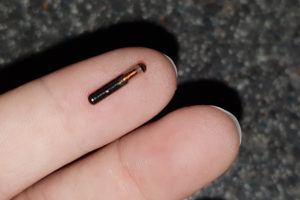
A microchip of average size, on a fingertip
Reptile skin is considerably thinner than that of mammals and contains no fat cells. This gives rise to two problems if one were to microchip reptiles in the same way as mammals. Firstly, the microchip could easily be removed via a small incision in the skin, which would not be in keeping with the aim of permanent and unalterable identification. Secondly, microchips placed in or under the thin reptile skin are more prone to migrating.
It is therefore advisable not to implant a microchip under the skin of reptiles, but within a muscle. There, the chip remains in place as intended and is very difficult to remove. In lizards, the left thigh is usually chosen for microchip implantation. However, the microchip is not intended by the manufacturer for implantation in muscle; this is therefore a repurposing or off-label use.
Can microchips be used on chameleons?
In principle, it is possible to fit chameleons with microchips. However, there are a number of arguments against implanting microchips in chameleons.
The AG ARK (= working group amphibian and reptile diseases, part of the German Society for Herpetology and Terraria DGHT e.V.), Europe’s largest association of veterinarians specialising in reptiles, expressly recommends against microchipping lizards weighing less than 200 g. This includes almost all chameleons commonly kept in terrariums. And even large species such as Calumma parsonii parsonii or Furcifer oustaleti do not exceed this weight limit within their first year – the very period when microchipping would be desirable for clear identification (after that, the animal might already have been replaced with a similar one.)
In chameleons, even the smallest microchip is disproportionately large in relation to their body size or the thigh muscle used. Injuries to blood vessels or nerves are therefore more likely than in large reptiles such as green iguanas or Nile crocodiles. For this reason, implantation in chameleons should ideally be carried out under anaesthesia. As the skin cannot close up quickly on its own, as it does in mammals, the wound must be sutured or sealed with a special tissue adhesive after microchipping in chameleons. The skin at the incision site usually turns black for a while. This effort and the associated risks are disproportionate to the benefits.
An alternative to using the thigh muscle is to implant the microchip directly into the coelomic cavity. As this involves surgery, anaesthesia is also required. The microchip is then not firmly attached to the inner abdominal wall, but moves freely within the thoracoabdominal cavity. This can lead to inflammation, adhesions with the intestines and other organs, or peritonitis. However, it is also possible that the microchip will remain in the coelomic cavity without causing any reaction – unfortunately, it is not possible to know before implantation which of these outcomes will occur.
The World Small Animal Veterinarians Association (WSAVA) generally recommends implanting a microchip into the coelomic cavity in lizards with a snout-vent length (SVL) of less than 12.5 cm, and using the skin in the left inguinal region for larger lizards. In a statement, the AG ARK expressly advises against microchipping chameleons.
An interesting development in species conservation: in An interesting development in species conservation: in 2013, herpetologist Krystal Tolley conducted a trial in South Africa to fit chameleons with microchips for identification purposes. She implanted the chips under the skin in the hope of reducing the illegal trade in protected species. Unfortunately, this hope has not yet been realised. On the one hand, the microchips are very easy to remove from under the skin. On the other hand, the costs associated with the chip cannot yet be covered across the board.
Species conservation: Clear labelling for identification purposes
In Germany, the Federal Species Protection Ordinance – specifically Section 12 – stipulates that certain protected species (listed in Annex 6, Column 1) must be individually identified. Photographic documentation is expressly provided for as an alternative to microchipping; it can and may be used in place of a microchip.
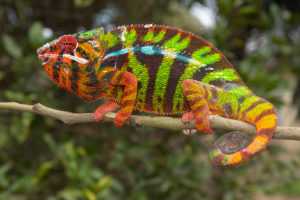
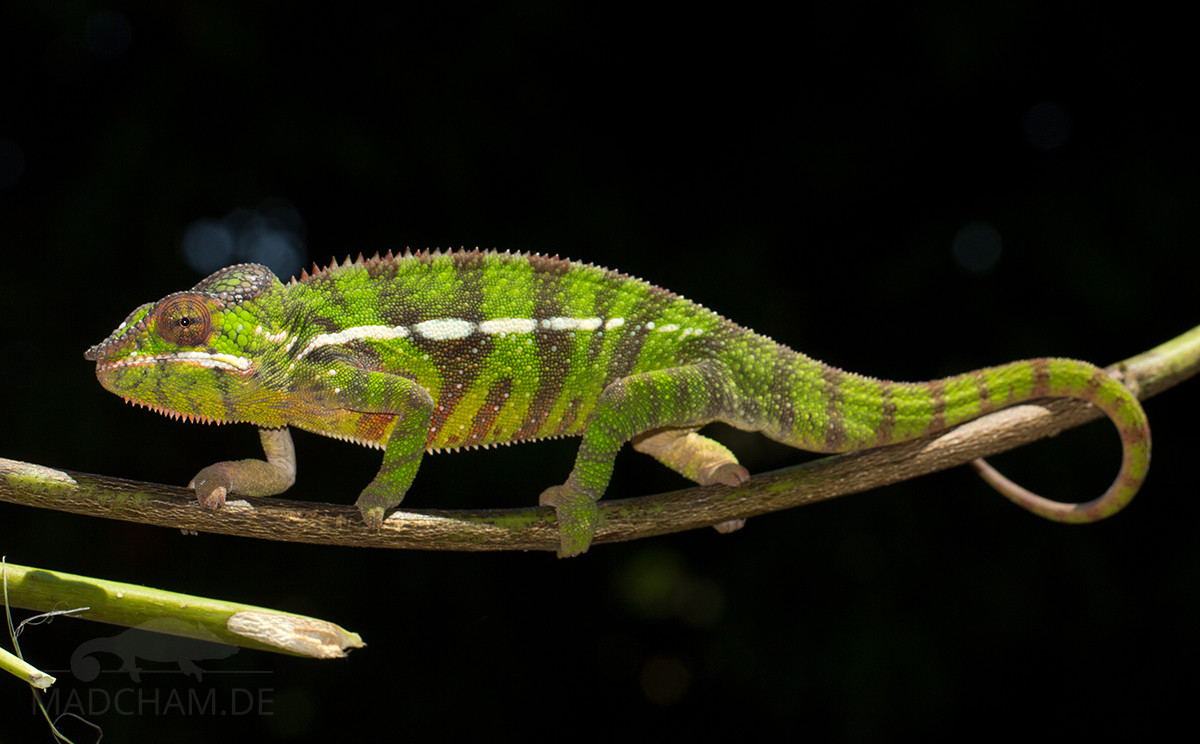
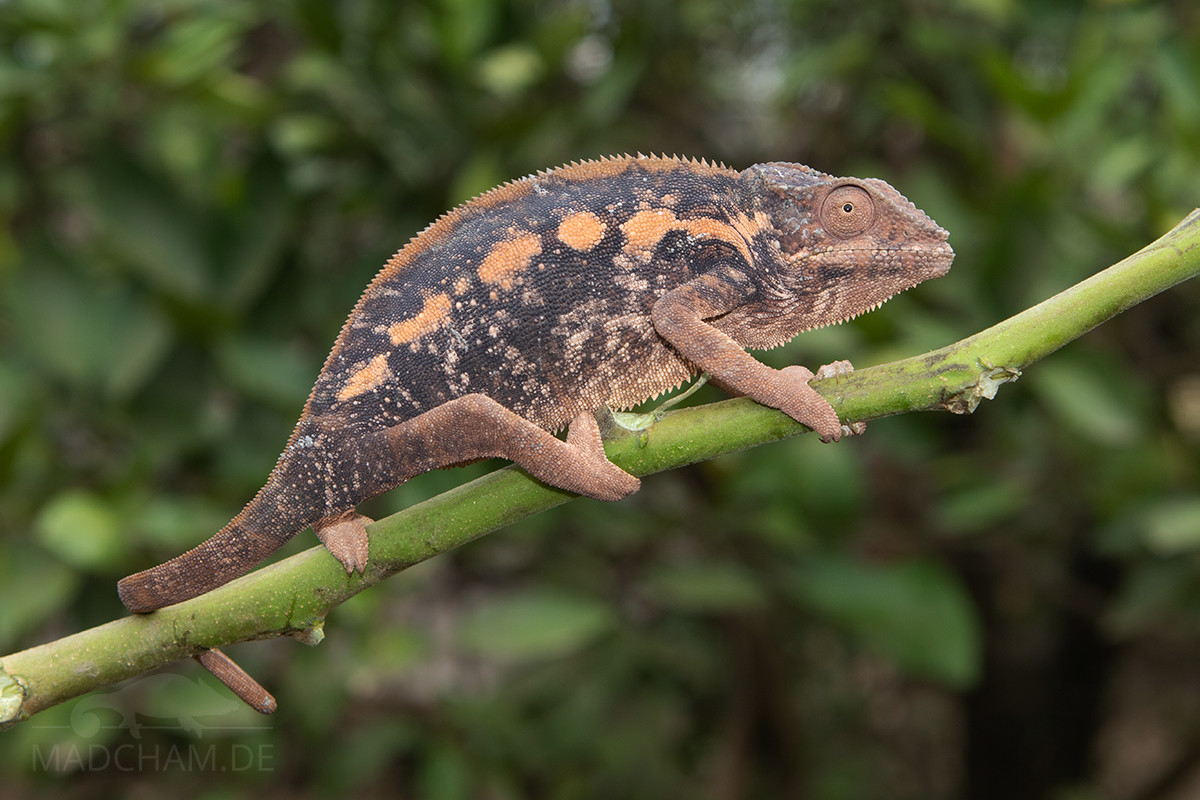
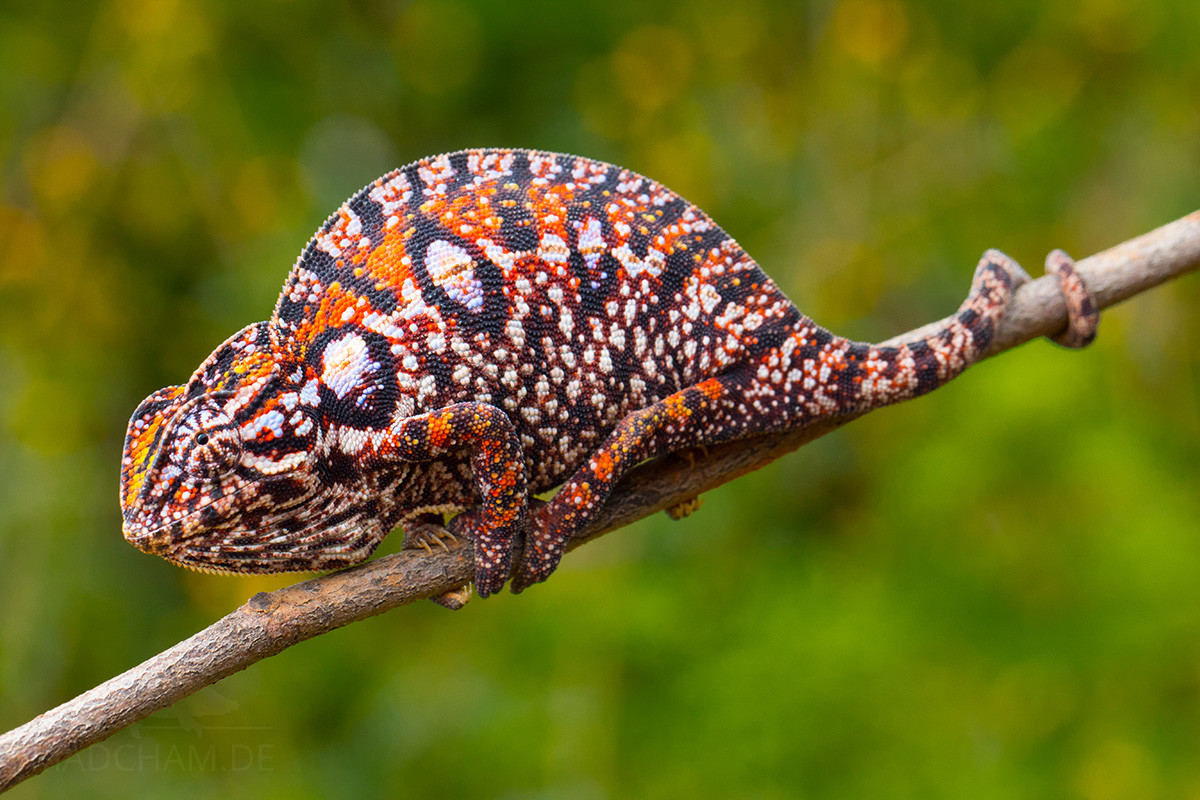
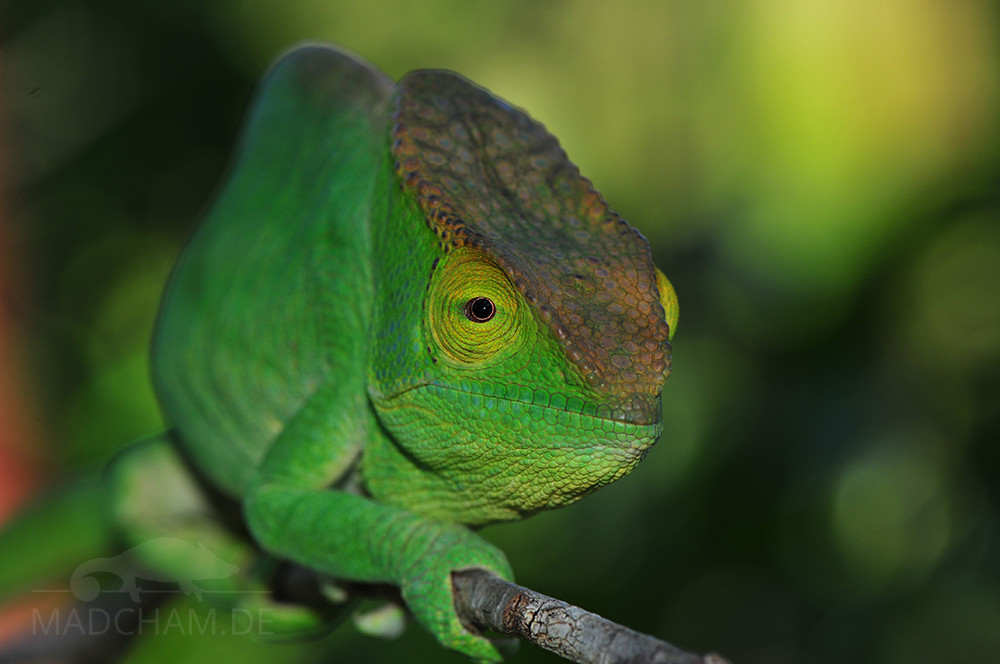
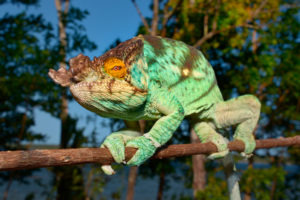
Every chameleon has such a unique pattern that it can be used to identify an individual animal
It is important, however, that the documentation is carried out regularly (at least once a year) and continuously from the moment of hatching, and that the photographs taken are of good quality. A standardised, plain background, such as that frequently used for tortoises, is a good option for this. The photos should show the chameleon’s entire body clearly and in sharp focus. In addition, sharp, well-lit photos of the head are useful. The scale and colour patterns of chameleons vary from individual to individual, meaning that a photograph can reliably identify a single chameleon, much like a fingerprint.
At present, there is a requirement to record only the species Chamaeleo chamaeleon and Brookesia perarmata via photographic documentation. The authorities in some towns insist that all other chameleons must also be recorded via photographic documentation, even though this is not a requirement for these species. However, it is generally advisable, for documentation purposes, to regularly archive good-quality photographs of your own chameleons.
Das könnte dir auch gefallen



Follow us on Instagram

Most popular articles


Your travel specialist for Madagascar